The lock and dam system on America’s rivers initially was built to facilitate commerce – originally steamboats. Before the lock and dam system, riverboat traffic was at the mercy of nature. In the summer, water levels were low and sandbars prevented boats from moving on the river. In the fall, the rivers would fill and river traffic would resume. Dams keep the water levels consistent; locks allow boats to navigate past the dams. Even today, barges move a significant amount of raw materials, e.g. corn and coal, to their markets.
Between Minneapolis and St. Louis, there are 29 locks and dams. We passed through 26 of them on the cruise. Each lock raised the American Queen between 10 and 40 feet. Due to varied geography, each lock and dam is unique. However, every lock works about the same.
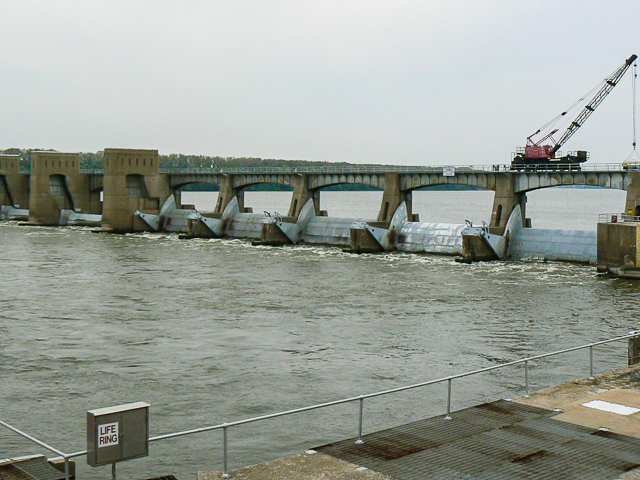 The crane on top of this dam opened the water gates. Water flowed under
the gates.
The crane on top of this dam opened the water gates. Water flowed under
the gates.
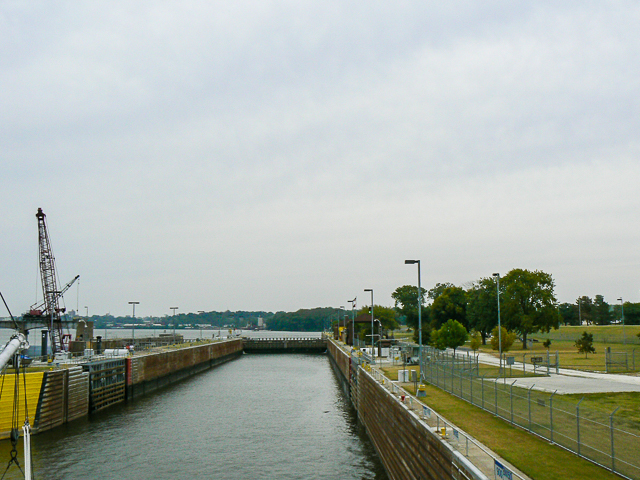 The American Queen eased into the lock chamber. The water on the far
side of the gate was about 12 feet higher than the water on our side of the gate.
The American Queen eased into the lock chamber. The water on the far
side of the gate was about 12 feet higher than the water on our side of the gate.
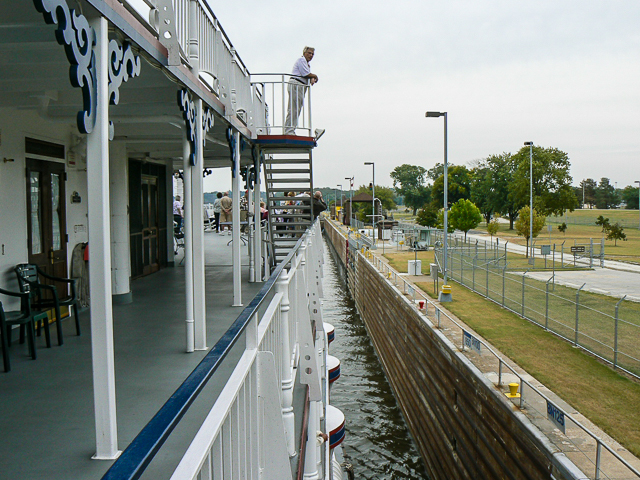 She snuggled up against one of the lock walls. One of the boat's pilots was on the
lookout area on the deck above me.
She snuggled up against one of the lock walls. One of the boat's pilots was on the
lookout area on the deck above me.
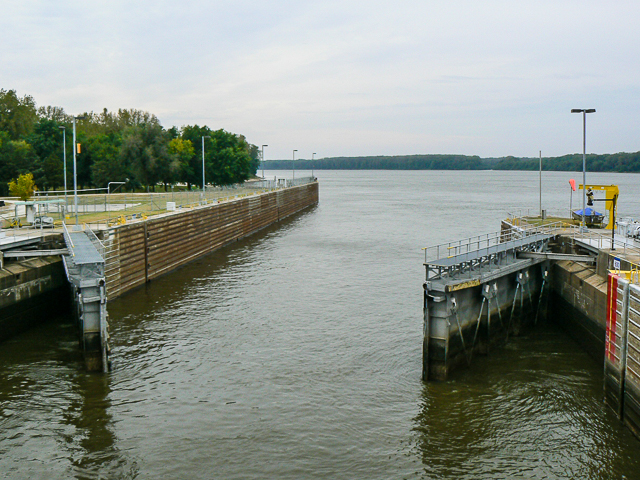 Behind us the lock gates started to close.
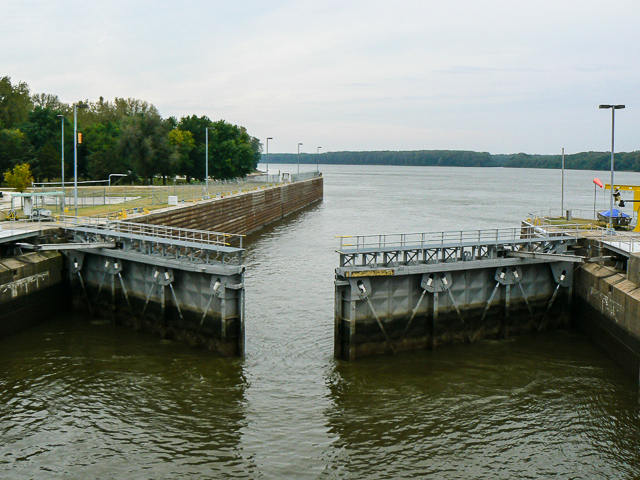 The gates closed slowly.
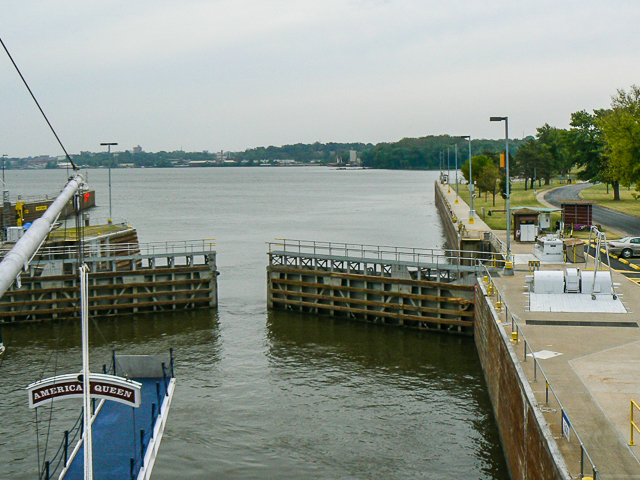 They pumped water into the lock chamber until we were the same height as the water
upstream of us. Then the lock gates in front of us opened.
They pumped water into the lock chamber until we were the same height as the water
upstream of us. Then the lock gates in front of us opened.